By Daniel K. · Updated 2026-08-18 · 13 min read
An IPTV free trial sounds like the safest way to test a streaming provider before paying a cent. You get a few hours or days of access, browse the channel list, and decide whether the service deserves your money. That logic is sound, but the execution varies wildly from one provider to the next. After testing multiple trials and talking to users who got burned after signing up, I can tell you this: the trial is both the most useful and the most misleading part of the IPTV buying process.
The dashboard above looks promising at first glance. It lists thousands of channels, organized by language and region. But the real test isn't the menu — it's what happens when you press play during peak hours. This review covers the whole IPTV free trial experience honestly: what it actually includes, what it can and cannot prove, the real strengths and weaknesses, and how the best iptv free trial 2025 options compare to mainstream streaming alternatives. If you're wondering whether to try a free trial or go straight to a paid plan, this will help you decide.
No gimmicks here. I'll be straightforward about the risks, including buffering, legal gray areas, and the uncomfortable fact that your trial experience may not match the paid experience at all.
Why an Independent Review Is Needed
Search "iptv free trial reddit" and you'll see exactly what I mean. One user calls their provider the best thing since sliced bread; the next one says the stream died during the biggest match of the season. Both could be telling the truth about the same service — IPTV quality genuinely depends on your location, your ISP, the server load, and the time of day you're watching.
Independent reviews matter because most of what's written about IPTV free trials is affiliate marketing. The writer gets paid when you sign up, so the "review" becomes a polished variation of the provider's own sales page. That's not automatically dishonest, but it's not independent either. This article has no incentive to push one provider over another, so it focuses on how free trials actually work and which questions you need to ask before committing to a subscription.
What IPTV Free Trial Promises vs What You Actually Get
The promise made by almost every IPTV provider is the same: try before you buy, see the full channel list, no risk, no obligation. In practice, trials come with real limitations that the marketing pages don't mention.
Trial Duration: The 24-Hour Problem
The most common offer is the iptv free trial 24 hours. Some providers stretch to 7 days, a handful offer 72 hours, and a few barely give you 3 hours. The duration matters less than what you do with it. If you spend a 24-hour trial watching premium movies and checking 4K streams during the middle of the night, you'll feel great and learn almost nothing about the service's reliability at peak times.
Start the trial on a Tuesday afternoon and you'll get a different experience than starting it on a Sunday while major sporting events are live. Trial quality fluctuates, and providers know that. That's why weekend trials are harder to secure.
Credit Card Requirements
The demand for an iptv free trial no credit card option is completely understandable. You want to test the service without any future billing risk. Some providers give you exactly that — the trial works with just an email address, and the risk stays at zero. The catch: no-credit-card trials are usually shorter and sometimes limited to lower bitrate streams.
If a provider asks for a credit card to unlock a "free" trial, be cautious. Read the terms again. Some of those free trials auto-subscribe you at the end of the testing window, and the surprise monthly charge is completely real. The no-credit-card variant is safer and should always be your first choice.
Channel List: Full Access or "Full" Access?
Most IPTV free trials include the entire channel list. That's rare in the legal streaming world, where free trials of Hulu or YouTube TV restrict some content. IPTV doesn't usually restrict the menu — the whole list is visible. But visible is not the same as playable.
During a trial, you might discover that premium sports channels load in but buffer every few seconds, or that "4K" content streams at 720p on trial accounts. The channel count looks impressive, but the quality of each individual stream is what actually matters. Make a list of the ten channels you genuinely watch and verify each one during the trial period.
The Server Bait-and-Switch
This is the most common complaint among former subscribers: the trial runs on the provider's "demo" server, while the paid service runs on a shared production server. You can't see the difference on day one, but you'll feel it during peak evening hours after you pay.
When testing, ask the support team directly whether the trial access comes from the same servers as paid subscriptions. Some providers will answer honestly. Those that avoid the question are telling you something without saying a word.
Real Strengths with Specific Examples
Despite its limitations, a free trial has enough genuine value that you should probably use one before buying anything. Here's what it can actually give you.
1. Concrete channel verification. You can check the iptv free trial usa channels lineup against what you actually watch. For example, if you need a local ABC or NBC affiliate in your city and the provider only carries national feeds, you'll discover that during the trial instead of after paying. That alone is worth the signup.
2. Device testing. Different IPTV services behave differently on Firestick, Android TV, smart TVs, and web browsers. A 24-hour trial gives you enough time to install the app on your main device, get comfortable with the interface, and confirm everything works on your hardware.
3. Internet speed benchmark. An IPTV free trial is a practical way to test whether your home connection can handle 1080p or 4K live streams. If the trial buffers on your network, you either need better internet or a lighter streaming package. It's a free and honest network test.
4. Zero-risk entry with no card. If you find an iptv free trial no credit card offer, you have nothing to lose except a few hours. No auto-renewal, no card details to erase, no forgotten subscriptions. The provider gets your email — that's the only cost.
5. Direct provider comparison. One of the smartest uses of a trial is side-by-side comparison. Get a 24-hour trial from two different providers and run them on two screens. You'll quickly see which one handles sports coverage, news streams, or on-demand content better. You can't do that without the trial.
Real Weaknesses Without Minimizing
Now for the side that marketing pages skip. These are real, common issues that IPTV free trial users run into.
Reliability is not actually tested. Reliability means the service works the same at 2pm and 8pm, during a Champions League final or a quiet Tuesday. A 24-hour trial can't test any of that. Honestly, even a 7-day trial is too short to gauge long-term server health — but it at least covers a weekend.
Quality can drop after the trial. I wish this weren't true, but enough Reddit threads confirm it: the stream quality during the trial is good, and the quality after subscribing is worse. Whether that's deliberate bait-and-switch or just the effect of more users on the server after payment, it's a genuine risk. Ask the provider about server allocation for trial users before you hand over any money.
The legal gray area doesn't go away. IPTV services that stream premium channels without proper licensing operate in a gray zone. Taking a free trial doesn't make you legally responsible for anything, but if a server gets shut down by authorities, the service disappears and your paid subscription goes with it. That's the fundamental risk, and the trial doesn't remove it.
Email spam and data exchange. Free trials require an email address, and most providers use that to send promotional messages until you block them. Some even share signup lists with partner services. Use a temporary email address whenever possible, especially when testing providers you've never heard of.
Some trials are simply unusable. This happens more often than you'd think: providers overload trial slots to the point where streams cut out every 30 seconds. If a trial is unwatchable at 3 in the afternoon on a weekday, the paid service will be unwatchable at peak times on weekends. Ironically, that's useful information — but only if you recognize what it means.
Pros and Cons at a Glance
✓ Benefits & Pros
Full channel list usually visible for real verification
No-credit-card options exist for genuinely risk-free testing
Useful device compatibility check
Free benchmark for your home internet speed
Direct side-by-side comparison between two providers
No auto-subscription when the trial is set up correctly
✗ Limitations & Cons
24-hour window is too short for reliability judgment
Trial and paid service often use different server paths
Legal gray area remains regardless of trial status
Email spam and possible data sharing after signup
Support during trials is better than for paid users
Some trials cap stream quality below 1080p
RECOMMENDED RESOURCE
iptv free trial
Access zero-contract options and instant delivery specs.
See iptv free trial Pricing →Who Is It Genuinely Suited For?
Cord cutters who know what they want. The trial is a perfect tool for verifying specific channels — including USA locals, regional sports networks, and niche international channels — before paying. If you know exactly what you need, the trial either proves it or reveals the gap.
Budget-conscious users comparing services. Two or three free trials are the only honest way to compare IPTV providers without paying setup fees and activation costs multiple times. The side-by-side method I described earlier works best for people who want value without wasting money on bad providers.
Travelers and expats. If you're outside the USA and need an iptv free trial usa channels check before committing, the trial verifies which feeds are actually available abroad and whether the service handles international routing without excessive buffering.
Tech-savvy viewers. If you understand how to evaluate stream quality, set up a VPN, configure a Firestick, and switch to backup servers, the trial gives you everything you need to make an informed decision. The technical mindset is essential.
The comparison between the 24-hour and 7-day options is exactly what determines your experience. As the image above suggests, a 7-day trial gives you coverage of an entire weekend, which matters for sports fans and live TV viewers. But those longer trials often require a credit card or a pre-agreed subscription. Balance what you need against what you're willing to share.
Who Should Look Elsewhere?
Non-technical users. If terms like APK, VPN, server URL, and M3U playlist sound foreign, IPTV will frustrate you. The trial won't change that. Legal streaming services designed for mainstream consumers are simpler, more reliable, and worth the extra cost for people who don't want a project.
Viewers in legally strict regions. Some countries aggressively enforce IPTV copyright violations, and the free trial won't protect you from legal risk. Check your local laws before even starting a trial if you're outside a gray-zone jurisdiction.
People who require 100% stability. IPTV providers are not commercial-grade broadcasters. Expect occasional buffering, server maintenance windows, and abrupt channel outages. If you get angry when a stream drops during a movie, you'll be better off with a traditional cable plan.
Users with under 10 Mbps connections. The trial will fail on your connection, and it won't be the provider's fault. IPTV needs consistent bandwidth, especially for HD and 4K streams. Upgrade your internet before expecting a positive trial experience.
How It Compares to Alternatives
IPTV trials compete with the free trials of legitimate services like Hulu, YouTube TV, and fuboTV. Each serves a different purpose, and the comparison below is a realistic look at what you're trading off.
In the table above, IPTV 7-day trials are rare. Always check the terms before entering payment details. Some providers that advertise a "7-day free trial" actually require a prepaid subscription and refund you only if you cancel on time — that's a serious red flag. Read the fine print twice, and screenshot the signup page before submitting anything.
Unlock complete high-definition information instantly here.
Explore iptv free trial Plans →If your goal is watching premium sports, catching international channels, and keeping costs low, an IPTV free trial is the most direct way to test a provider before paying. If your priority is zero hassle and full legal compliance, the mainstream services are safer — and their free trials are definitely worth using while they last. There's no perfect answer; it depends on which tradeoffs you're comfortable with.
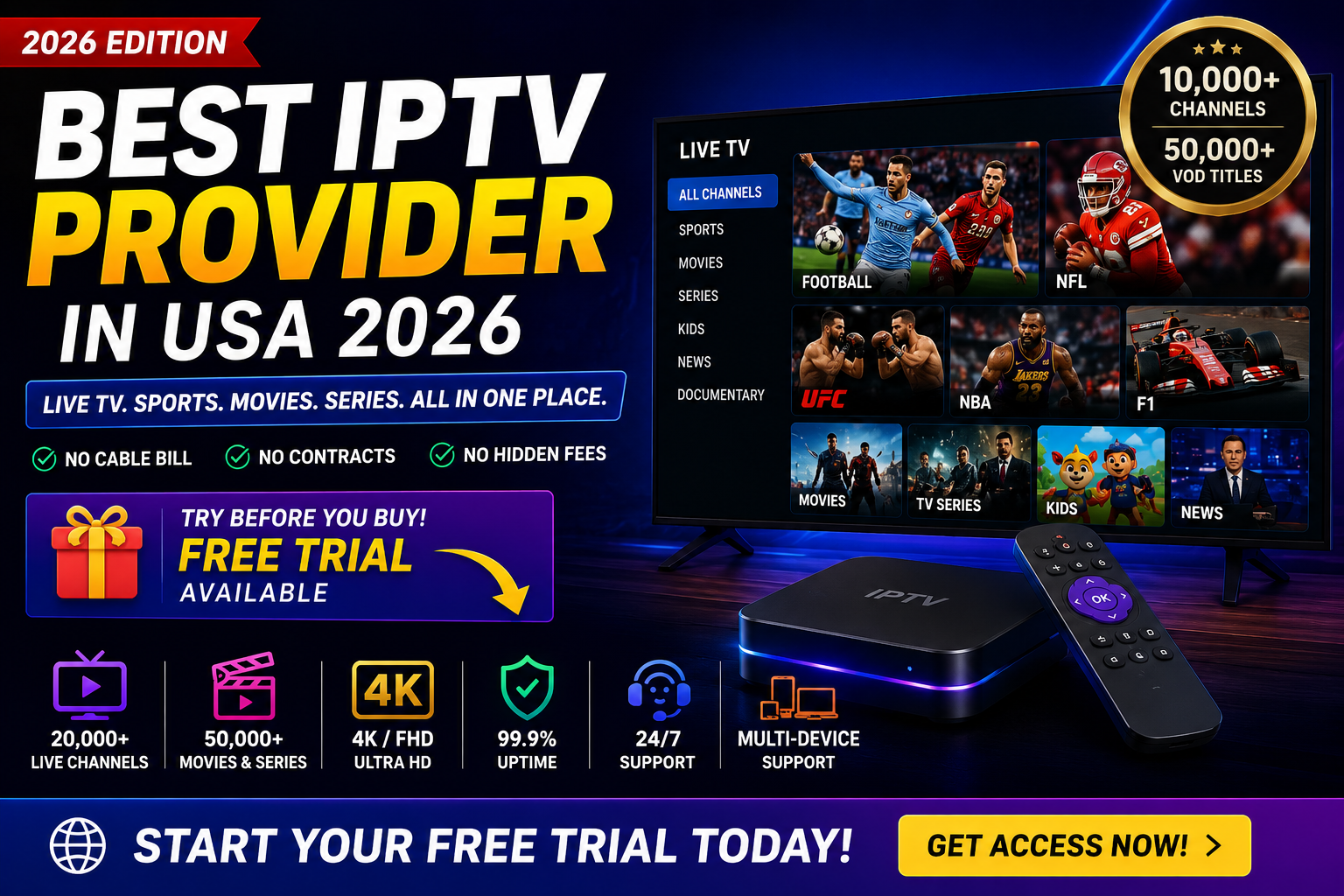
The channel grid you see above is exactly what most trial users look at first. Sports, movies, news — everything seems to be there. But the real question is whether those channels stay stable when it matters. Use the trial to click through all the categories that matter to you, not just the ones that look modern in the preview.
Verdict and Balanced Recommendation
Is the IPTV free trial worth it? Yes, with important qualifications. It's the only realistic way to test a service before paying, and when done correctly, it can save you from a bad subscription. But it's not a magic tool. It won't validate long-term reliability, it won't protect you from legal gray areas, and it won't tell you what happens after the servers get crowded following your payment.
Here's a step-by-step method to make the most of a trial:
Step 1: Choose providers with a no-credit-card trial option first. If they don't offer one, ask why.
Step 2: Activate the trial at a time you actually watch TV — evenings, weekends, or game days. Don't start a trial on Monday morning and expect to learn about peak performance.
Step 3: Test 5 to 10 channels you'd actually watch. That's more reliable than scrolling through thousands of channels and feeling impressed.
Step 4: Check the same channel in SD, HD, and 4K if available. Quality differences between tiers tell you a lot about server capacity.
Step 5: Test the catch-up or video-on-demand section, not just live channels. Many users discover VOD failures only after subscribing.
Step 6: Time the buffering. If a stream cuts out, note exactly when it happens. Patterns reveal server issues or ISP throttling.
Step 7: Ask the provider about server paths for trial users. If they dodge the question, consider that an answer.
Follow those steps and the trial becomes a useful decision tool rather than another marketing layer.
Featured Streaming Selection:
Learn more about iptv free trial →Affiliate Disclosure: Clicking this secure link verified by our network supports our team through standard partnership terms at zero extra cost to your invoice.
Frequently Asked Questions
This article contains affiliate links. Our editorial analysis remains independent.