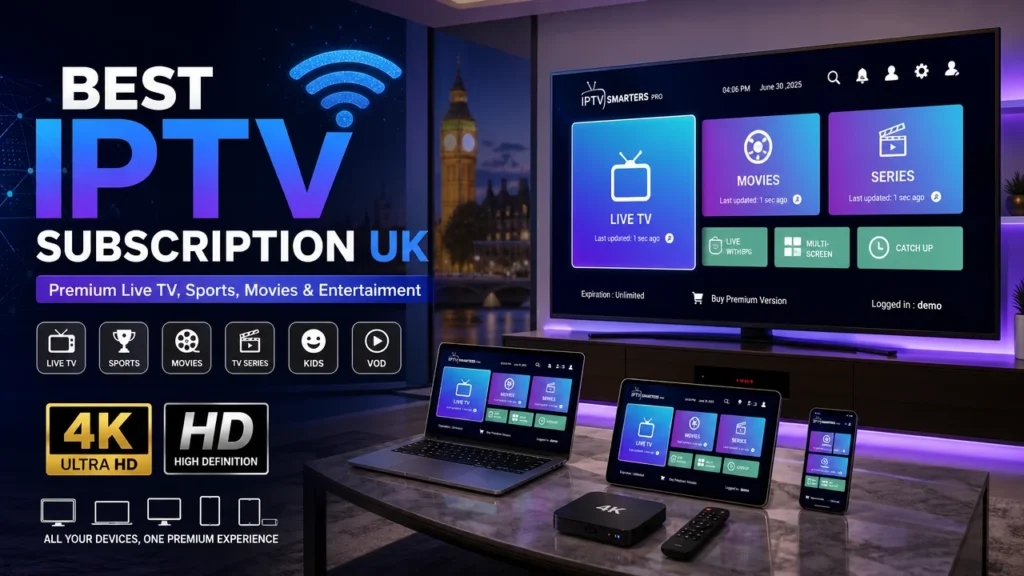
IPTV services have fundamentally changed how millions of households consume television. Instead of paying $80–$150 per month for cable bundles loaded with channels you never watch, IPTV delivers live TV, sports, movies, and on-demand content over your internet connection at a fraction of the cost. The technology has matured dramatically since the early days of buffering and unreliable streams — modern IPTV providers now offer 4K UHD quality, 99.9% uptime, and channel lineups exceeding 15,000 stations from every corner of the globe.
But the market is crowded, and not all IPTV services are created equal. Some providers operate in legal gray areas with unstable infrastructure, while others deliver polished, enterprise-grade experiences. This guide breaks down exactly how IPTV works, what to look for in a provider, and how to pick the right subscription for your viewing habits — without wasting money on a service that buffers during the big game.
IPTV Services Summary
IPTV services stream live television and on-demand content over the internet, replacing traditional cable with lower costs, vastly larger channel lineups, and multi-device flexibility. The best providers deliver 4K UHD streams, 15,000+ channels, and 99.9% uptime for $10–$25 per month — a fraction of cable's $80+ monthly bill.
| Optimal ForCord-cutters, sports fans, international viewers, and budget-conscious households seeking maximum channel variety at minimal cost. | Key AdvantageUnmatched channel diversity (15,000+ global stations), 4K UHD streaming, and multi-device support at 80% less than cable. |
- ✓ Key Strength: Live sports packages covering NFL, NBA, Premier League, and international leagues with zero blackout restrictions.
- ✓ Key Strength: Full 4K UHD streaming with anti-freeze technology and adaptive bitrate that adjusts to your connection speed.
- ✓ Peace of Mind: 24/7 customer support, free trial periods, and money-back guarantees on premium IPTV plans.
In This Guide
What Is IPTV and How Does It Work?
IPTV stands for Internet Protocol Television. Unlike traditional cable or satellite TV, which broadcasts signals through coaxial cables or radio waves, IPTV transmits television content over the same internet protocol (IP) network that carries your web browsing and email. Every channel, movie, and sports event is broken into small data packets, sent over the internet, and reassembled in real time by your device — whether that's a smart TV, streaming box, phone, tablet, or computer.
There are three primary delivery models within IPTV. Live television streams broadcast channels in real time, much like cable — but with a vastly larger channel lineup spanning international networks, niche sports packages, and premium movie channels. Video on Demand (VOD) gives you instant access to a library of movies, TV series, and documentaries that you can watch anytime, similar to Netflix or Prime Video. Time-shifted TV lets you rewind, pause, or replay live broadcasts — a feature cable companies often charge extra for. Most premium IPTV subscriptions bundle all three into a single package.
The technical backbone of a reliable IPTV service is its server infrastructure. Top-tier providers operate dedicated servers with load balancing across multiple data centers, ensuring that thousands of concurrent streams don't cause degradation. They also use advanced encoding formats (H.265/HEVC) to deliver 4K UHD video at bitrates that remain stable on typical broadband connections. Anti-freeze technology and adaptive bitrate streaming automatically adjust quality based on your connection speed, minimizing buffering during peak hours.
One critical thing to understand is that IPTV is not the same as over-the-top (OTT) streaming services like Netflix or Hulu. While both use the internet, OTT platforms are closed ecosystems with curated content libraries. IPTV providers aggregate thousands of live channels from around the world and deliver them in a cable-like channel guide format — often including local broadcast stations, international news networks, and every major sports package in one place.
For most households, the appeal is obvious: instead of juggling multiple streaming subscriptions (Netflix, Hulu, ESPN+, Paramount+), IPTV consolidates everything into one interface with one monthly bill. A typical premium IPTV subscription costs $15–$25 per month, while the average cable bill in the United States reached $83 per month in 2025 — and that's before premium channels, DVR fees, and equipment rentals.
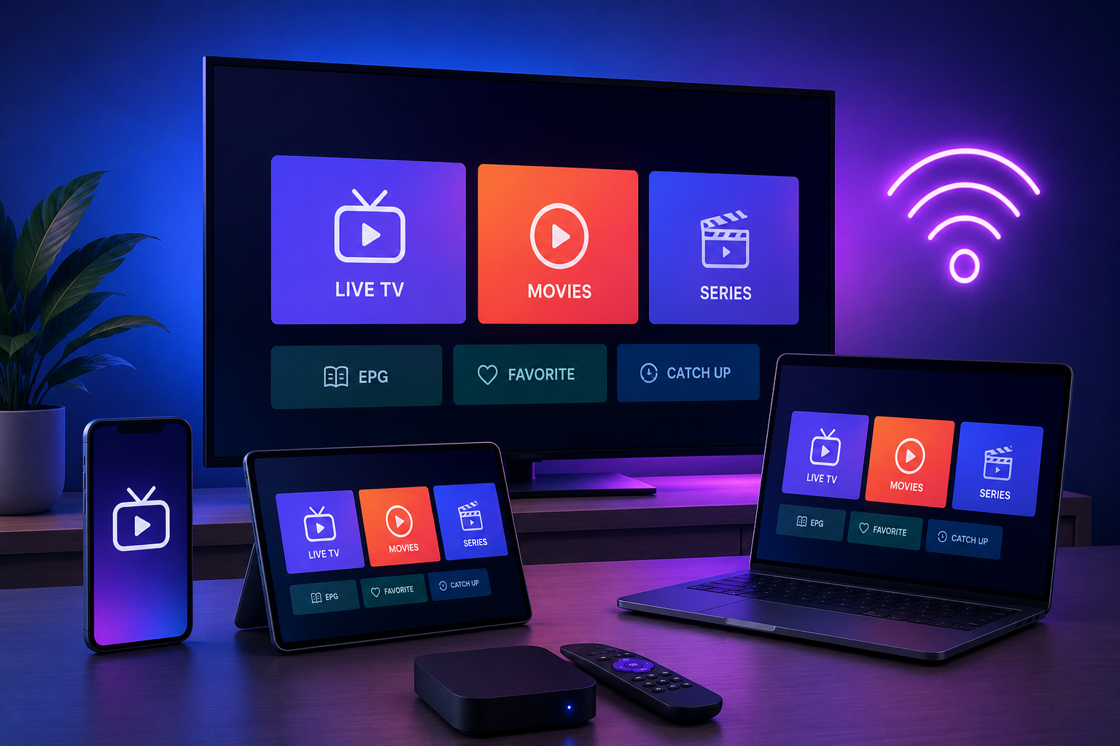
IPTV Services: Pros, Cons, and Key Data
Before committing to any IPTV subscription, it's essential to weigh the real-world advantages and drawbacks. IPTV isn't a perfect solution for everyone, and understanding its limitations will help you choose wisely.
✓ Pros
|
✗ Cons
|
Top IPTV Service Tiers Compared
Not all IPTV subscriptions are the same. The table below breaks down the three main tiers of IPTV services so you can match the right one to your needs and budget.
| Feature / Metric | Premium IPTV | Budget IPTV | Traditional Cable |
|---|---|---|---|
| Channel Count | 15,000–20,000+ | 5,000–8,000 | 300–500 |
| Max Streaming Quality | 4K UHD + HDR | 1080p Full HD | 720p–1080p |
| Monthly Cost | $15–$25 | $8–$12 | $50–$80+ |
| VOD Library Size | 60,000+ titles | 20,000+ titles | Limited (on-demand add-on) |
| Device Support | All platforms (Smart TV, Android, iOS, Firestick, PC, MAG) | Smart TV, mobile, Firestick | Set-top box only |
| Uptime Guarantee | 99.9% | 95%–98% | 99.5% (but outage-prone) |
| Setup Time | Minutes (plug-and-play) | May require manual configuration | Hours (technician visit) |
As the data shows, premium IPTV services offer the best overall value — dramatically more channels, higher quality, better reliability, and multi-device flexibility at a fraction of cable's cost. Budget options can work for casual viewers, but they often suffer from buffering, limited VOD libraries, and less responsive customer support.
Cost-Benefit Analysis: Is IPTV Worth It?
The math behind IPTV is compelling. The average American household spends approximately $83 per month on cable television, which amounts to nearly $1,000 per year. Add premium channel packages, DVR service fees, and HD technology fees, and the total often exceeds $100 per month. Over a year, that's $1,200 or more — for channels you rarely watch.
A premium IPTV subscription at $20 per month costs $240 per year. That's a savings of $760–$960 annually compared to cable. Even when you factor in the cost of a high-speed internet connection (which most households already have for work, school, and streaming), the total cost of IPTV remains dramatically lower. And you're getting 15,000+ channels instead of 300–500, 4K UHD quality instead of 1080p, and a VOD library that rivals Netflix and Prime Video combined.
The hidden value lies in what IPTV eliminates: equipment rental fees ($10–$15/month), broadcast TV fees ($15–$20/month), regional sports fees ($5–$10/month), and DVR service fees ($10–$15/month). These add-ons are baked into most IPTV subscriptions at no extra cost. You also gain the flexibility to cancel anytime without early termination penalties — a major advantage over cable contracts.
Who Should Use IPTV Services?
IPTV services aren't for everyone, but they're an excellent fit for several specific profiles:
- Cord-cutters: If you've already ditched cable but miss live TV, IPTV fills the gap without forcing you back into a pricey bundle.
- Sports enthusiasts: IPTV providers aggregate every major sports package — NFL Sunday Ticket, NBA League Pass, Premier League, UFC pay-per-view — into one subscription. You'll never miss a game again.
- International viewers: Expatriates and multicultural households can access channels from their home country — including local news, entertainment, and sports — that aren't available through traditional cable.
- Budget-conscious households: Families looking to cut entertainment costs without sacrificing channel variety will find IPTV's $15–$25 monthly price point transformative.
- Multi-device users: If you want to watch TV on your living room screen, tablet in the kitchen, and phone in bed — all simultaneously — IPTV's multi-connection support makes it easy.
Key Buyer Considerations Before Subscribing
Choosing the right IPTV provider requires careful evaluation. Here are the most important factors to consider:
Internet speed requirements. For reliable 4K streaming, you need a minimum of 25 Mbps download speed; for 1080p, 10–15 Mbps suffices. Check your connection speed before subscribing. If you have a slower connection, choose a provider with adaptive bitrate technology that automatically downgrades quality to prevent buffering.
Device compatibility. Ensure the IPTV service supports your preferred devices. Most premium providers offer apps for Android TV, Firestick, Apple TV, iOS, Android phones, Windows, and macOS. Some also support MAG set-top boxes and Enigma2 devices. If you want to watch on a specific platform, verify compatibility before paying.
Legal considerations. The IPTV landscape is complex. Some providers operate without proper content licensing, which carries legal risks for both the provider and, in some jurisdictions, the end user. Choose a provider that is transparent about its licensing and operating standards. Reputable services like IPTV Stream Pulse clearly state their compliance and use legitimate content distribution agreements.
Trial periods and money-back guarantees. Never commit to a long-term IPTV subscription without testing the service first. The best providers offer free 24-hour trials or 7-day money-back guarantees. Use this window to evaluate stream quality, channel selection, buffering frequency, and customer support responsiveness.
Customer support quality. IPTV issues can arise at any time — a channel goes down, a stream buffers, a device stops working. A provider with 24/7 live chat support is invaluable. Check reviews and forums to gauge how responsive each provider's support team actually is.
VPN compatibility. Some internet service providers throttle IPTV traffic, which degrades stream quality. A good IPTV service should work seamlessly with VPNs, allowing you to bypass throttling and maintain consistent quality. Verify that your chosen provider doesn't block VPN connections.
The Bottom Line on IPTV Services
For the vast majority of cord-cutters, sports fans, and budget-conscious households, premium IPTV services deliver unmatched value — 15,000+ channels, 4K UHD quality, and on-demand libraries at 80% less than cable. Choose a reputable provider with transparent licensing, strong uptime guarantees, and responsive support, and you'll wonder why you didn't make the switch sooner.
Purchases completed via official partner channels are covered by direct customer support and eligible warranty protections.
Frequently Asked Questions
What exactly is IPTV and how is it different from cable?
IPTV (Internet Protocol Television) delivers television content over your internet connection rather than through coaxial cables or satellite signals. Unlike cable, which broadcasts a fixed lineup of channels, IPTV streams individual channels on demand — meaning you can access 15,000+ channels from around the world, watch on any internet-connected device, and enjoy on-demand libraries that cable can't match. The key difference is delivery method: cable is a one-way broadcast, while IPTV is a two-way interactive stream.
Is IPTV legal?
The legality of IPTV depends on the provider. Legitimate IPTV services obtain proper content licensing from broadcasters and rights holders — these are fully legal. However, some providers operate without proper licensing, which places them in a legal gray area and exposes users to potential risks. To stay safe, choose a provider that is transparent about its licensing and compliance. Reputable services like IPTV Stream Pulse clearly document their legitimate content distribution agreements.
What internet speed do I need for IPTV?
For standard definition (480p), you need at least 5 Mbps. For Full HD (1080p), 10–15 Mbps is recommended. For 4K UHD streaming, you'll want a minimum of 25 Mbps. Keep in mind that these speeds should be dedicated to streaming — if other devices on your network are consuming bandwidth (gaming, video calls, large downloads), you may need a faster connection. Premium IPTV providers use adaptive bitrate technology that automatically adjusts quality to match your available bandwidth, minimizing buffering.
Can I watch IPTV on my smart TV?
Yes. Most premium IPTV providers offer dedicated apps for popular smart TV platforms including Samsung Tizen, LG webOS, Android TV, and Apple TV. If your smart TV doesn't have a native app, you can still use a streaming device like Amazon Firestick, Roku, or Chromecast to access IPTV. Many providers also support screen mirroring from your phone or tablet. Always check device compatibility before subscribing.
What's the difference between IPTV and streaming services like Netflix?
Netflix, Hulu, and Prime Video are over-the-top (OTT) streaming platforms — closed ecosystems with curated, licensed content libraries that you access on demand. IPTV, by contrast, aggregates thousands of live television channels from around the world and delivers them in a cable-like channel guide format. IPTV includes live sports, breaking news, international channels, and premium entertainment — things traditional OTT platforms don't offer. Many IPTV services also include a VOD library, making them a comprehensive replacement for both cable and multiple streaming subscriptions.
Do IPTV services offer sports channels?
Absolutely — sports are one of the primary reasons people switch to IPTV. Premium providers carry every major sports package including NFL Sunday Ticket, NBA League Pass, MLB Extra Innings, NHL Center Ice, Premier League, La Liga, Serie A, UFC pay-per-view, WWE, and international cricket and rugby channels. You also get access to regional sports networks (RSNs) and 24/7 sports news channels like ESPN, Fox Sports, and beIN Sports. Most IPTV services offer zero blackout restrictions — a major advantage over cable.
How much does IPTV cost per month?
IPTV pricing varies by provider and plan tier. Budget services typically cost $8–$12 per month and offer 5,000–8,000 channels in 1080p. Premium services range from $15–$25 per month and include 15,000+ channels, 4K UHD streaming, 60,000+ VOD titles, and 99.9% uptime guarantees. Some providers also offer quarterly, semi-annual, or annual plans with discounted rates. Compare the total value — channel count, quality, reliability, support — rather than just the sticker price.
What happens if my IPTV service buffers or goes down?
Buffering and downtime are typically symptoms of either your internet connection or the provider's server infrastructure. First, check your connection speed and ensure other devices aren't consuming excessive bandwidth. If the issue persists, contact the provider's customer support. Premium IPTV services maintain 99.9% uptime through redundant servers and load balancing, and they offer 24/7 support to resolve issues quickly. Before subscribing, look for providers that offer free trials or money-back guarantees — this gives you a risk-free window to test reliability.
Transparency & Disclosure: We independently evaluate products. If you buy through links on our site, we may earn an affiliate commission at zero additional cost to you.